Introduction & Inspiration
Kitty Stack Tower is a tabletop rule design built around three core actions — stacking, flipping, and disassembling. The central challenge is using quantity, space, and color constraints to make the three actions restrain one another, building strategic depth within simple turn-based rules.
A tabletop game rule design case study for 2-4 players, focused on stacking, flipping, disassembling, victory scoring, and physical piece interaction.
The Celebration Tower Tournament of Kitty Paradise
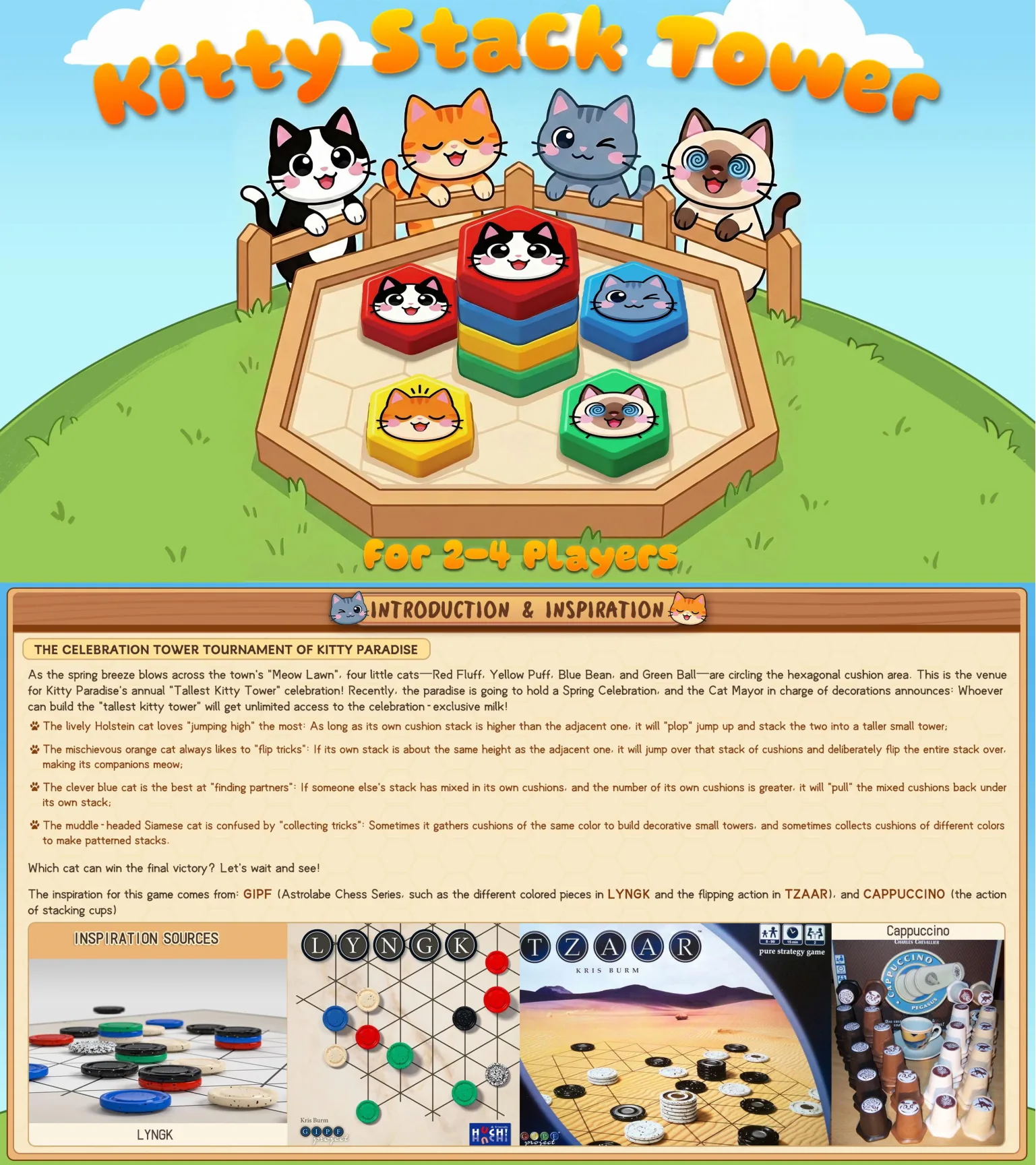
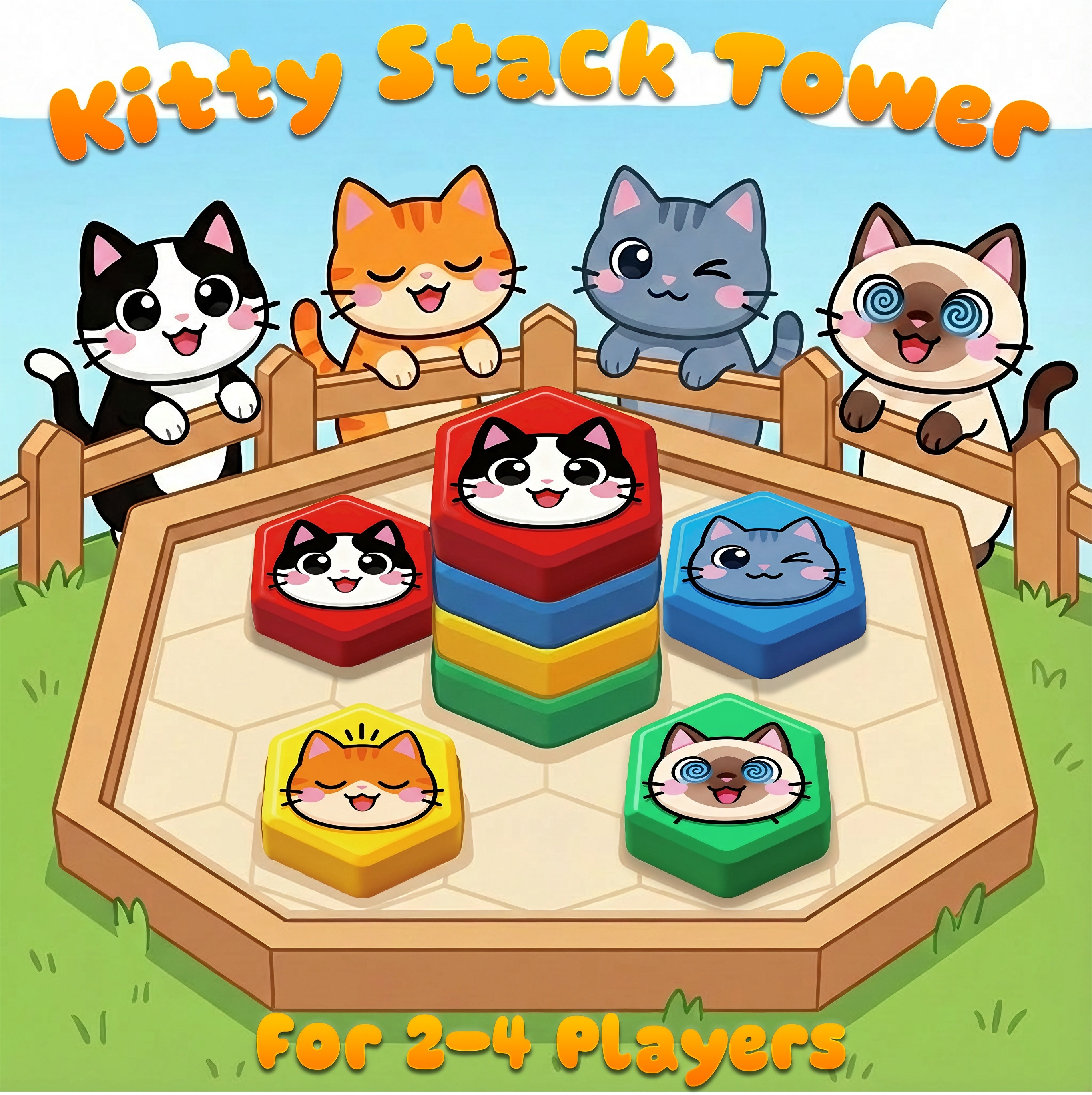
As the spring breeze blows across the town’s “Meow Lawn”, four little cats — Red Fluff, Yellow Puff, Blue Bean, and Green Ball — are circling the hexagonal cushion area. This is the venue for Kitty Paradise’s annual “Tallest Kitty Tower” celebration! Recently, the paradise is going to hold a Spring Celebration, and the Cat Mayor in charge of decorations announces: Whoever can build the “tallest kitty tower” will get unlimited access to the celebration-exclusive milk!
- The lively Holstein cat loves “jumping high” the most: As long as its own cushion stack is higher than the adjacent one, it will “plop” jump up and stack the two into a taller small tower.
- The mischievous orange cat always likes to “flip tricks”: If its own stack is about the same height as the adjacent one, it will jump over that stack of cushions and deliberately flip the entire stack over, making its companions meow.
- The clever blue cat is the best at “finding partners”: If someone else’s stack has mixed in its own cushions, and the number of its own cushions is greater, it will “pull” the mixed cushions back under its own stack.
- The muddle-headed Siamese cat is confused by “collecting tricks”: Sometimes it gathers cushions of the same color to build decorative small towers, and sometimes collects cushions of different colors to make patterned stacks.
Which cat can win the final victory? Let’s wait and see!
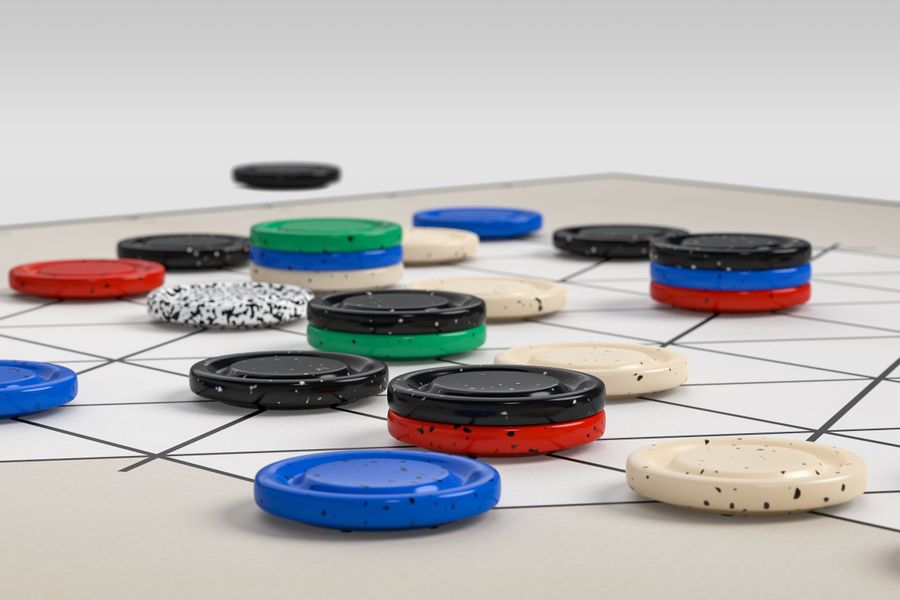
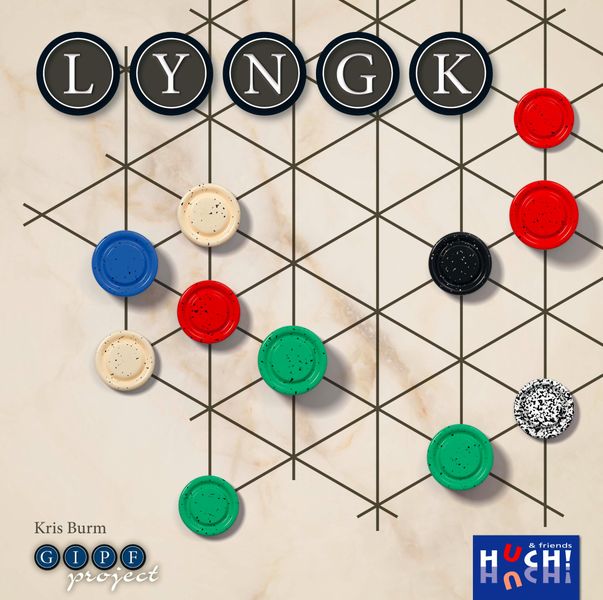
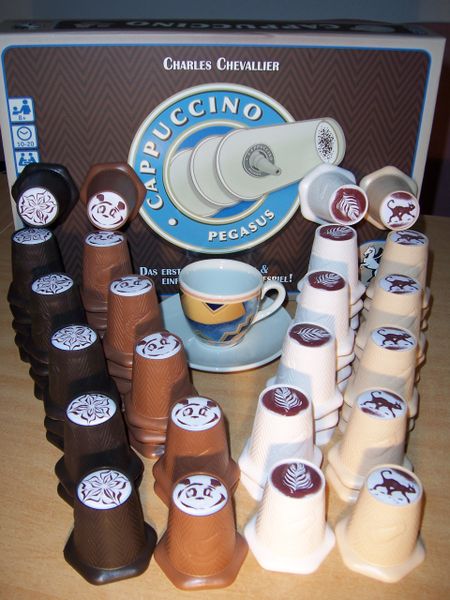
The inspiration for this game comes from: GIPF (Astrolabe Chess Series, such as the different colored pieces in Lyngk and the flipping action in Tzaar), and Cappuccino (the action of stacking cups).

Game Rules
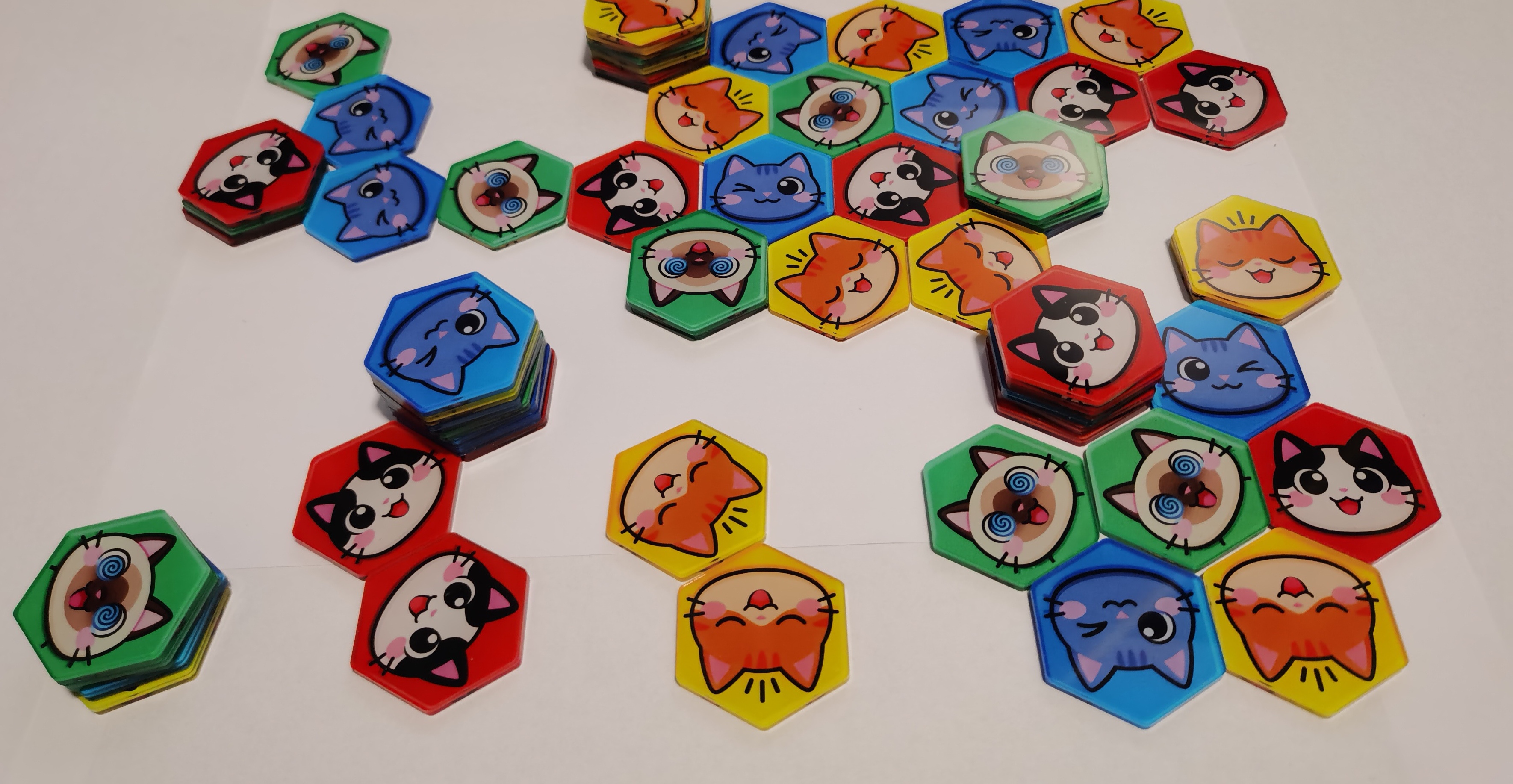
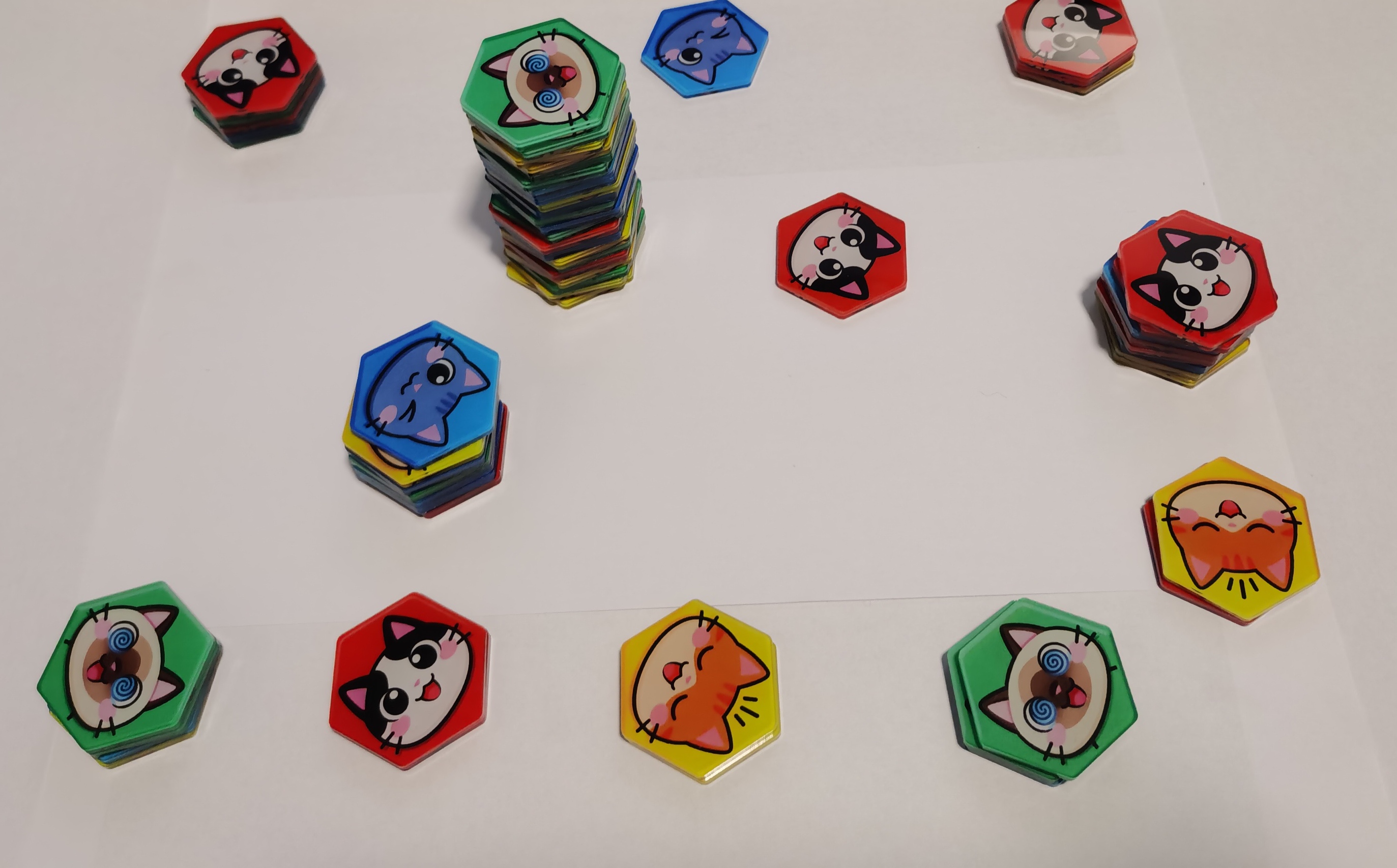
This board game is for 2-4 players. Each player chooses a color (Red, Yellow, Blue, Green), and each has 15 regular hexagonal pieces.




On each turn, a player can move their own piece and perform one of the following three actions:
- Stack on an adjacent piece or stack (when stacking, your own stack must not be shorter than the adjacent stack).
- Flip: Jump over an adjacent stack and flip the entire stack (your own stack must be shorter than or equal in height to the adjacent stack, and the position after jumping over the adjacent stack in a straight line must be empty of any pieces or stacks).
- Disassemble: If the number of your own color pieces in your stack is greater than the number of the opponent’s color pieces in the adjacent stack, and the adjacent stack also contains your own color pieces, move all pieces above the highest piece of your own color in that stack to the bottom of your own stack.
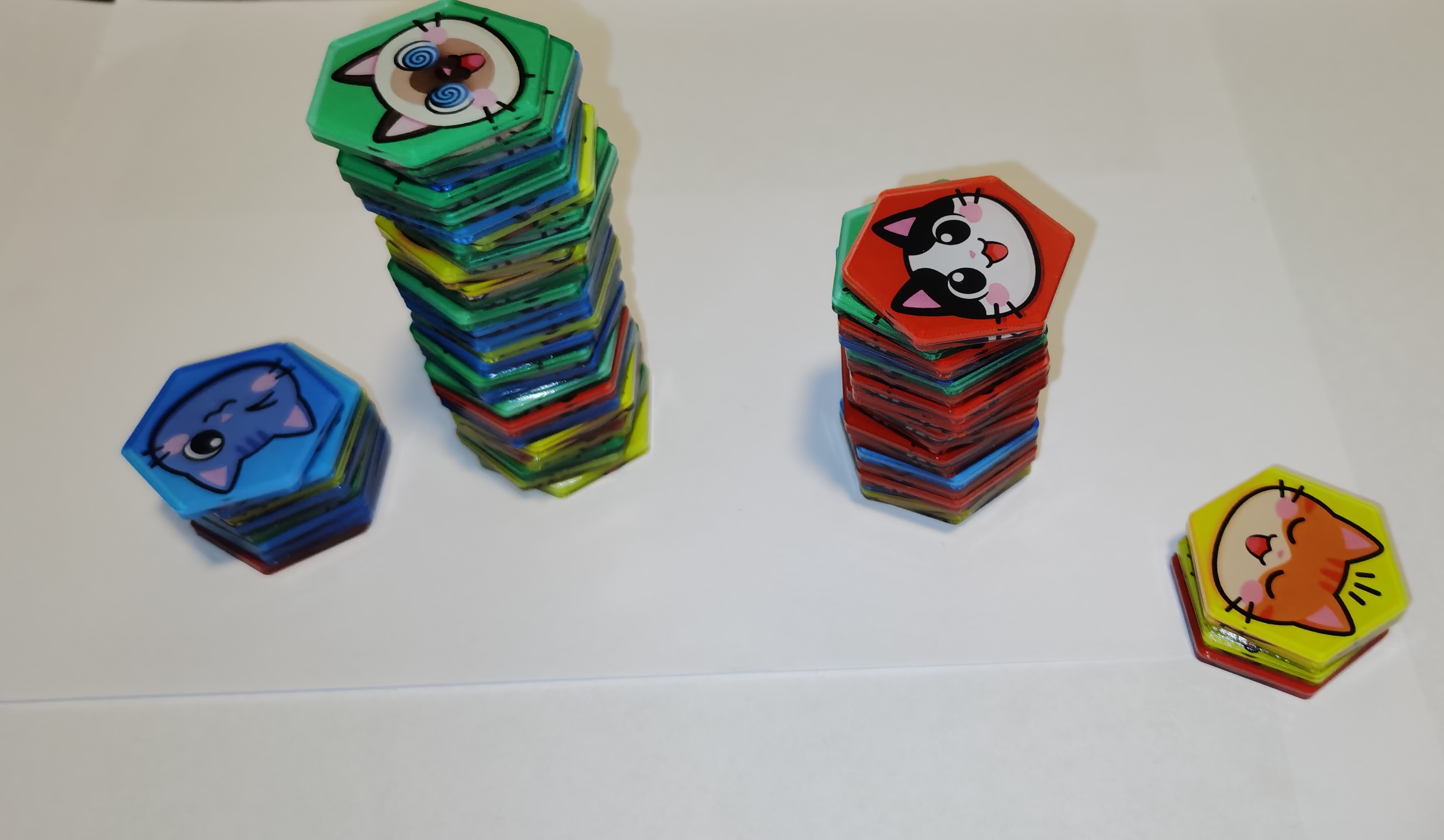
When all players can no longer take any actions (including stacking, flipping, and disassembling), each player scores points — each piece in their stack counts as 1 point, and the player with the highest score wins. For 3-4 players, in addition to the final height scoring, each player gets extra points according to the rules of the Objective Cards, and the player with the highest total score wins.
Victory Conditions
When all players can no longer take any actions (including stacking, flipping, and disassembling), each player combines all their own stacks into one. The player with the tallest stack wins. If the stacks are of the same height, the player with more pieces of their own color in that stack wins.
Game Flow
- All players place their pieces freely until all pieces are set (Advanced Variant: Players take turns placing one of their own pieces at a time until all pieces are placed).
- Players take turns in order (clockwise or counterclockwise). Unless holding a special Objective Card, each player can only perform one of the three actions below per turn.
- The game ends when no player can perform any of the actions in Step 2, or when all players pass their turn in a single round. Each player combines all their own stacks into one. The player with the tallest stack wins. If the stacks are of the same height, the player with more pieces of their own color in that stack wins.
1. Stack
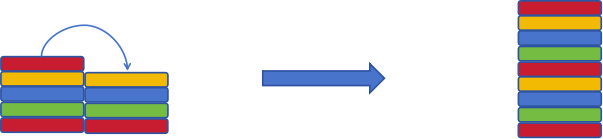
If your moving piece or stack is not shorter than the adjacent stack, you can place your stack on top of the adjacent stack.
2. Flip
If your stack is shorter than or equal in height to the adjacent stack, has at least 2 pieces, and the position directly across the adjacent stack (in a straight line) is empty of any pieces or stacks, you can jump over the adjacent stack and flip that entire stack upside down.

3. Disassemble
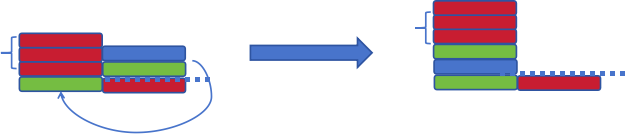
If the number of your own color pieces in your stack is greater than the number of the opponent’s color pieces in the adjacent stack, and the adjacent stack also contains your own color pieces, move all pieces above the highest piece of your own color in that stack to the bottom of your own stack.
Introduction of Objective Cards
For 3-4 players, each player draws 2 Objective Cards before the game starts (invisible to other players). Players can also exchange Objective Cards with others before or during the game (only executable if both parties agree, and each player can perform the exchange only once).
1. Monochromatic Frenzy
(Reveal this card when triggered for the first time) When there are no fewer than 5 consecutive pieces of the same color in one of your stacks, you can immediately remove this stack from the playing field (this stack can no longer perform any of the three actions) and get extra points equal to the number of pieces.

2. Layered Peaks
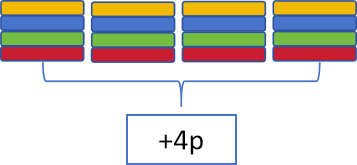
At the end of the game, score points based on the number of stacks you own. For example, if you have 4 stacks, you get an extra 4 points.
3. Color Master
At the end of the game, get tiered points based on the number of different colors in each of your stacks. Each stack with 2/3/4 colors scores 1/2/3 points respectively. For example, if you have 2 stacks — one with 3 colors and the other with 4 colors — you get 2 + 3 = 5 points.

4. Focused Power
At the end of the game, score points for the single color with the highest total number of pieces across all your stacks. You get 1 point for every 2 pieces of that color; any remaining pieces less than 2 do not count. For example, if you have 13 red pieces, you get 13/2 = 6 points.

5. Rainbow Bridge
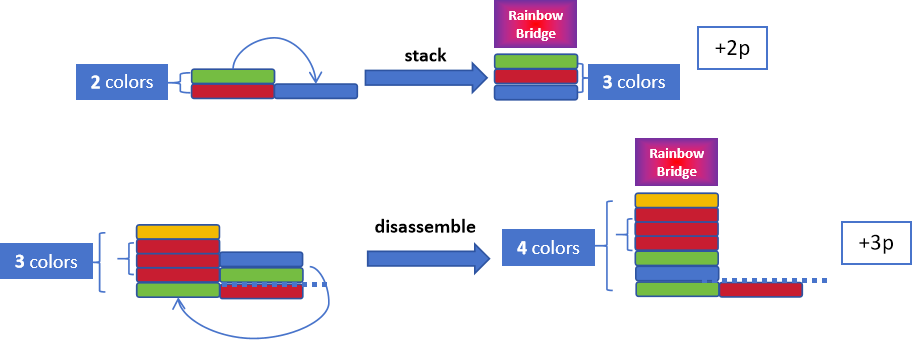
(Reveal this card when triggered for the first time) For 3-4 players, if a single action (including “Stack” and “Disassemble”) causes one of your stacks to contain 3/4 colors at the same time, score points immediately: Get 2/3 points each time this card is triggered, and place a “Rainbow Bridge” token on top of this stack. This stack can no longer trigger this effect again (i.e., the stack had fewer than 3/4 colors before).
6. Tower King
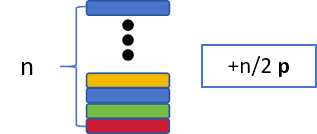
At the end of the game, score points equal to the height of your tallest single stack divided by 2. For example, if the stack height is 17 pieces, you get 17/2 = 8 points.
7. Dramatic Twist
(Reveal this card when triggered for the first time) For each “Flip” action that causes a stack to switch ownership from another player to you in a single turn, get 2 points immediately and place a “Dramatic Twist” token on top of this stack. This stack can no longer trigger this effect again.

8. Vibrant Colors
At the end of the game, for each of your stacks with no fewer than 5 pieces, check every pair of adjacent pieces from bottom to top. If every pair of adjacent pieces in the stack is of different colors, you get 5 points for that stack. Sum up the points from all eligible stacks.

9. Forced Exchange
During the game, you can select another player and force them to choose one of their Objective Cards to exchange with one of yours. Then discard this card.
10. Continuous Stacking
(Reveal this card when triggered for the first time) During the game, before performing a Stack action, if the tops of all stacks in the straight line of your adjacent stack are of the same color (and their heights are not higher than your stack), you can stack continuously until the adjacent piece is of a different color. Get 1 point for each stack during this process.

Design Notes
Three actions form a interdependent relationship through quantity, space, and color constraints. Stacking builds height advantage, flipping breaks the height landscape, and disassembling intervenes in color purity. Understanding these constraints is the foundation of design iteration.
Restrictions for the Three Actions
- Stack: Quantity restriction — your stack must have more pieces than the adjacent stack to execute.
- Flip: Quantity + Space restriction — the position after jumping must be empty of any pieces or stacks to execute.
- Disassemble: Color + Quantity restriction (also regarded as color purity restriction) — the number of your own color pieces in your stack must be greater than the number of the opponent’s color pieces in the adjacent stack to execute, and you cannot perform Disassemble on your own stack.
Connections Between the Three Actions
As shown in the figure below, the three actions can mutually provide execution conditions or make each other more favorable.
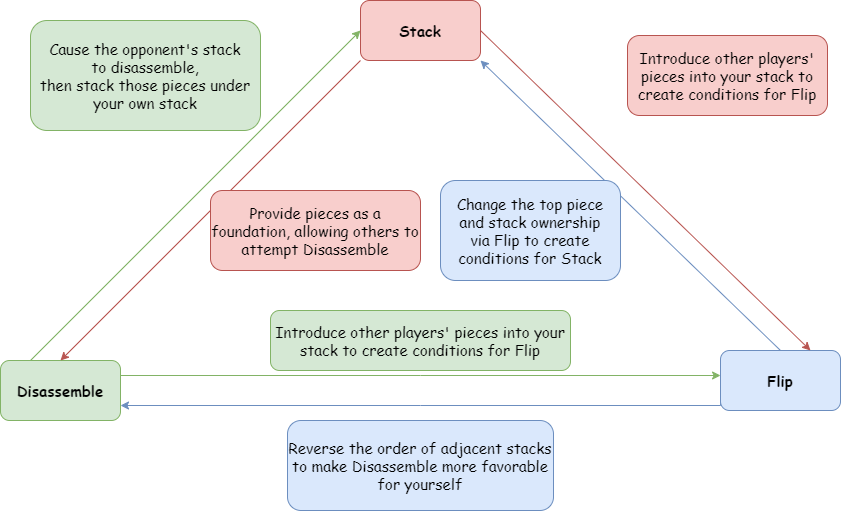
Diagram of Actions Connections
Design Decision: Three actions form a cycle through quantity, space, and color constraints — stacking builds height advantage, flipping breaks the height pattern, and disassembling intervenes in color purity. Every rule change revolves around rebalancing these constraints.
Reflection & Feedback
1. Flip’s Reward vs. Risk
The reward for Flip is relatively high, and it does not match the risk. For example, one piece can flip a stack of pieces (seven or eight), but the player performing this action does not bear much risk — at most placing their own piece in an empty spot. Although there is a restriction that the jumping position must be empty, this completely limits players’ action strategies: Players will try to avoid leaving empty spots and stack pieces from the surrounding area toward the center to prevent their stacks from being flipped, resulting in very low usage frequency of Flip. Therefore, the execution conditions and risks of Flip need rethinking.
Modification Plan: Add a restriction — Flip can only be executed if the stack has no fewer than 2 pieces and the stack is not higher than the adjacent stack. This avoids the situation where 1 piece can flip an adjacent stack (especially at the start of the game, when most stacks are 1 piece high), giving players more turns to stack.
Feedback: This modification has led to two different playstyles: Multi-point Seedling and Single-point Stacking. The former allows players to place stacks of 2-3 pieces at multiple positions to achieve blocking (after stacking, reduce adjacent stacks and leave only stacks of their own color as much as possible around), keeping these placed stacks in a relatively safe state to accumulate advantages in the later stage. Single-point Stacking, on the other hand, ensures a height advantage by concentrating pieces in one stack. The advantage is fast development in the early stage, but the problem is that there will be a lack of stackable pieces in the mid-to-late stage (because other players will try to block your tallest stack as much as possible), making the tallest stack unable to act. Compared to the Multi-point Seedling playstyle, this playstyle is more conservative and overly dependent on pieces of one’s own color (because mixing in other colors makes the stack vulnerable to Flip or Disassemble, leading to failure), resulting in restrictions on subsequent actions.
2. Passing Turns
In the later stage of the game, many areas will be in a stalemate (for example, players are unwilling to continue stacking because there are other players’ stacks around that can perform Flip — once a player stacks further, they will be flipped and lose that stack). At this time, if all players pass their turns, the game cannot continue.
Modification Method: Add a game end condition: The game ends when all players pass their turns in a single round. If there are still players who can take actions, the game continues.
Feedback: Although the stalemate cannot be completely resolved, the game can be forced to end, making players carefully consider whether to pass their turns.
3. Monochromatic Piece Distribution
Pieces need to be placed before the game starts. When pieces of the same color are too concentrated, the player with that color has a higher winning rate — this is determined by the mechanism of the three actions (Stack, Flip, Disassemble). When the color purity of a stack is high, other players can hardly interfere with it and can only try to stack and absorb the stack through height advantage.
Modification Method: Encourage players to place pieces as scattered as possible during the placement phase, and guide players to try different placement methods and scoring playstyles through Objective Cards.
Feedback: The introduction of Objective Cards has slightly improved this issue, but subsequent testing and modifications to the Objective Cards (especially the score values) are needed to increase the diversity and playability of the game. Additionally, attempts should be made to find a more intuitive scoring method (to avoid frequent calculations that burden players and reduce the decision-making fun of the game).